

The new frontier of skincare doesn’t just work on the surface. It works on the dialogue between skin and the nervous system
For decades, cosmetics talked about hydration, collagen, wrinkles, dark spots. All real concerns, all addressable. But something was missing: a deep understanding of why skin ages so differently from person to person, why stress leaves visible marks on the face, why some textures soothe while others irritate.
The answer lay in a field that was quietly growing: neurocosmetics. And today, with a global market that reached $1.8 billion in 2023 and projections pointing to $4.1 billion by 2034, this is no longer a niche trend. It is the new standard of scientifically-driven skincare.
Skin is not just a barrier. It is an organ that feels.
Skin and brain share a continuous, bidirectional communication — a key component of the mind-body connection. The skin hosts a high number of nerve endings and sensory receptors capable of detecting touch, temperature, pressure and pain. It can also independently produce and release neurotransmitters and neurohormones such as serotonin and dopamine.
This communication system is known as the skin-brain axis. It is not a metaphor. It is anatomy. Skin and brain share a common embryological origin, meaning they are biologically connected from the very earliest stages of development. Through this axis, the skin perceives emotional stress in exactly the same way the mind processes it.
When we are under stress, the nervous system releases neurotransmitters such as cortisol and Substance P, which increase inflammation, redness and skin sensitivity. Neurocosmetic ingredients aim to interrupt this cycle by calming nerve endings, reducing neurogenic inflammation and restoring balance.
What neurocosmetics actually are
Neurocosmetics focus on the skin-brain connection and on how skincare products can influence the nervous system. By modulating neurotransmitters and improving sensory perception, the goal is to enhance skin health and beauty.
These are not drugs, nor invasive procedures. They are cosmetic formulations that act on the cutaneous peripheral nervous system, interacting with receptors, neuropeptides and local mediators. Key neurocosmetic ingredients include neuropeptides such as acetyl hexapeptide-8 (Argireline), palmitoyl peptides, copper tripeptide-1, modulatory neurotransmitters such as GABA and niacinamide (vitamin B3), as well as neuroprotective antioxidants.
One of the most studied examples is Argireline: acetyl hexapeptide-8 inhibits vesicular docking at neuromuscular synapses, reducing acetylcholine secretion and visibly softening expression lines after about a month of use. An effect similar to botox, but achieved topically and without any invasiveness.
Micro-tension: the invisible enemy of skin
One of the most compelling concepts to emerge from neurocosmetics research is that of micro-tension. Tension activates sensory nerves, releasing neuropeptides such as Substance P and CGRP. This leads to redness, sensitivity and low-grade inflammation that weakens collagen over time. Stress-activated nerves and cortisol suppress fibroblast activity, reducing the synthesis of collagen and elastin.
In practice: it is not just sun exposure or time that carves wrinkles. It is also the way the nervous system experiences daily life, translating emotional tension into persistent muscle contraction and subclinical chronic inflammation.
From neurobiology to advanced skincare: Armonita’s answer
Looking at the Armonita catalogue through the lens of neurocosmetics reveals a formulative consistency that goes beyond appearances. Several products integrate actives that, in light of what research has clarified about the skin-brain axis, prove relevant not only as cosmetic ingredients, but as modulators of skin’s response to stress.
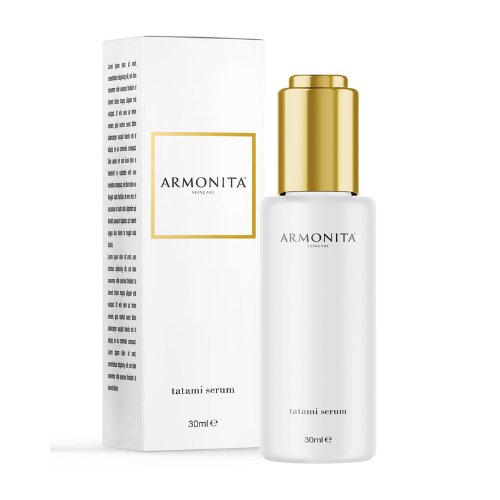
- Tatami Serum (Tokyo Collection) — The presence of Argireline, combined with Progeline and Bakuchiol, makes it one of the line’s products closest to the neurocosmetics philosophy. Argireline works by reducing the neuromuscular tension that generates expression lines, while Progeline counteracts skin laxity by acting on dermal progeria. A serum designed for those who age under pressure.
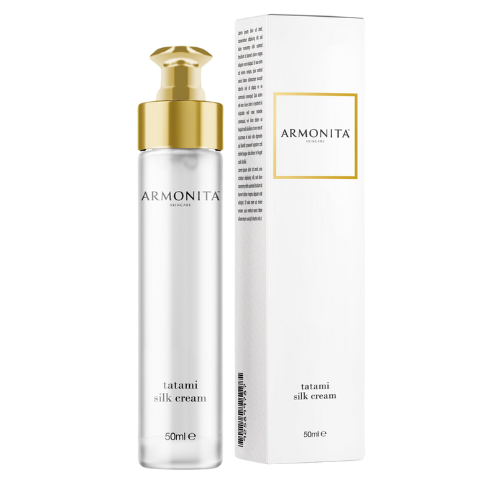
- Tatami Silk Cream (Tokyo Collection) — Combines Argireline and Gatuline Expression, two actives that work on the neuromuscular dynamics of wrinkles. The presence of Ceramide 3 strengthens the skin barrier, which stress tends to compromise through cortisol and the inflammatory response.
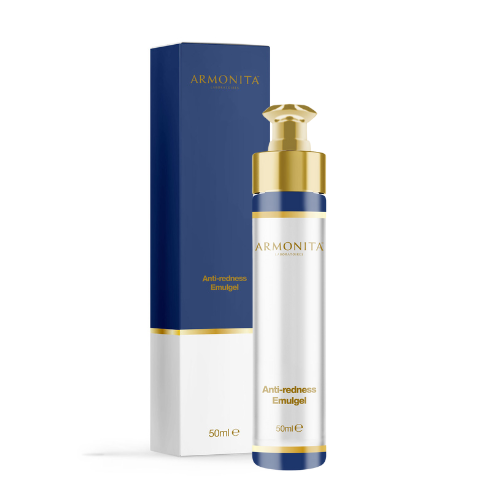
- Anti-Redness Emulgel (Armonita Laboratoires) — Formulated with Bisabolol, Neutrazen and Bromelain, it acts on redness and post-treatment sensitivity. Bisabolol reduces neurogenic inflammation, Neutrazen modulates cutaneous pain receptors (TRPV1). A post-procedural response that also works on the peripheral nervous system.
The future lies in the nervous system
Skin operates as a peripheral HPA axis, capable of autonomously producing and responding to stress hormones and neurotransmitters. Neuropeptides, serotonin and specialised nerve fibres create a signalling network in which topical formulations can trigger neurochemical responses that modulate inflammation, barrier repair and even emotional tone.
This changes the way we must think about skincare. No longer just as care for a surface, but as a dialogue with a complex biological system. The products that work best will increasingly be those capable of participating in this dialogue with awareness, with ingredients selected for their ability to modulate, calm and regenerate not just the tissue, but the nerve networks that run through it.
Armonita is already working in this direction.
Are you interested in distributing the Armonita line?
Reference sources: The Rise of Neurocosmetics, Multispecialty Society; HPC Today 2/2024; Rajagopal S. et al., Neurocosmetics: An Extensive Overview, IJAP 2025; Bonjil.com, Neurocosmetics Review 2026.

