

From UVA/UVB damage to the formulation solution: why the selection of ingredients determines efficacy, tolerability and treatment adherence
Every year the dermatological literature accumulates evidence on the role of ultraviolet radiation in the onset of melanoma, squamous cell carcinoma and premature skin aging. At the same time, awareness is growing that not all solar filters available on the market are equivalent from the perspective of toxicological safety.
The choice of filter ingredients and support actives is therefore not a secondary variable: it is the core of the formulation project.
Armonita Sun-Kissed is born from the integration of these two objectives, effective protection and a controlled safety profile, within a line that makes daily photoprotection practical, pleasant and scientifically sound.
The biological damage from UV radiation
Ultraviolet radiation is divided into three bands: UVC (280–100 nm), UVB (315–280 nm) and UVA (400–315 nm). Only UVA and UVB penetrate the ozone layer and reach the skin. The damage they produce follows distinct but convergent mechanisms toward the same biological outcomes.
UVB rays, more energetic, act directly on the DNA of keratinocytes, inducing the formation of thymine and pyrimidine-pyrimidinone dimers. Peak exposure occurs between 10:00 and 15:00 and the characteristic clinical marker is erythema. UVA rays, although less energetic, have an environmental exposure 20–40 times greater and are biologically active over a wider time window, from dawn to dusk. Their primary damage mechanism is indirect: they trigger the production of reactive oxygen species (ROS) that oxidize lipids, proteins and nucleic acids. UVA-induced oxidative damage specifically targets the TP53 gene, which normally regulates cell survival, promoting the appearance of mutations in melanocytes.
In terms of photoaging, the biological response to UV radiation resembles that of a chronic wound: activation of extracellular matrix metalloproteinases (MMP), degradation of collagen and elastin, structural cross-linking. The result is tissue remodeling that clinically translates into wrinkles, loss of tone and visible aging. Added to this is the depletion of Langerhans cells, with replacement by immature dendritic cells and monocytes that determine a state of local immunosuppression: a relevant factor in the development of carcinomas even in the absence of prior erythema.
Scientific evidence supporting the formulation approach
A systematic review published in 2024 in Cureus analyzes the safety and efficacy of sunscreens with specific attention to the toxicological profile of organic and inorganic ingredients. The study shows that oxybenzone (benzophenone-3) is associated with endocrine disruption, bioaccumulation in breast milk, urine and adipose tissue, and potential in vitro neurotoxicity. The authors explicitly recommend excluding it from formulations. In contrast, avobenzone and octocrylene show a favorable safety profile, with mutual stabilization and effective broad-spectrum protection.
The review also highlights how the cosmetic tolerability of the product, light texture and absence of white residue, directly influences treatment adherence. A sunscreen not correctly applied does not protect, regardless of the factor declared on the label. Topical antioxidants are identified as an effective adjuvant to reduce ROS-induced damage from UV, without needing to remain on the skin during exposure.
The formulation rationale of Armonita Sun-Kissed
The line is developed without oxybenzone and without declared allergens, with 71.5% ingredients of natural origin. The filters ensure broad-spectrum UVA/UVB coverage. Triopherol® is present as a base antioxidant in every product of the range, with specific actives for each function in individual formats.
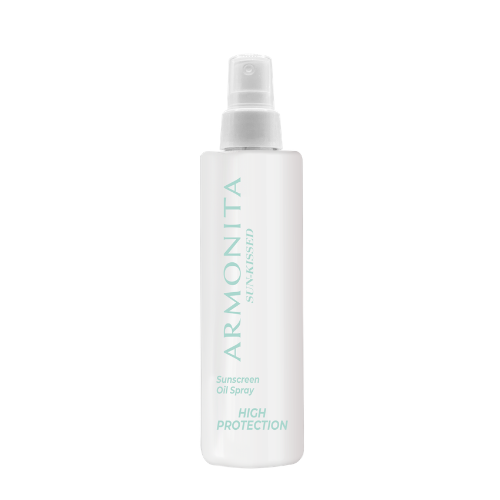
The Sunscreen Oil Spray (200 ml) directly addresses the adherence problem: transparent texture, immediate absorption, no white residue. Squalene and Elaeis Guineensis Oil maintain the hydrolipidic film; Lycopene, a carotenoid with documented antioxidant activity, contributes to the neutralization of ROS.
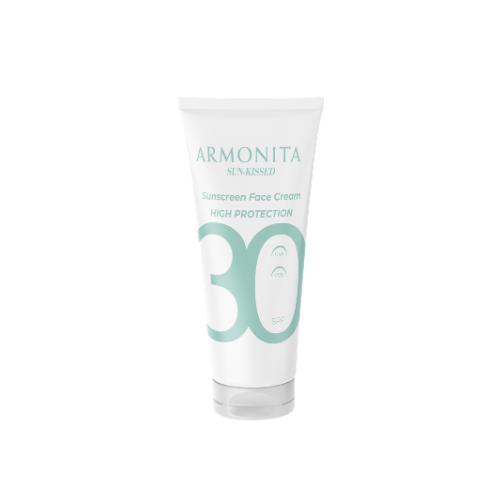
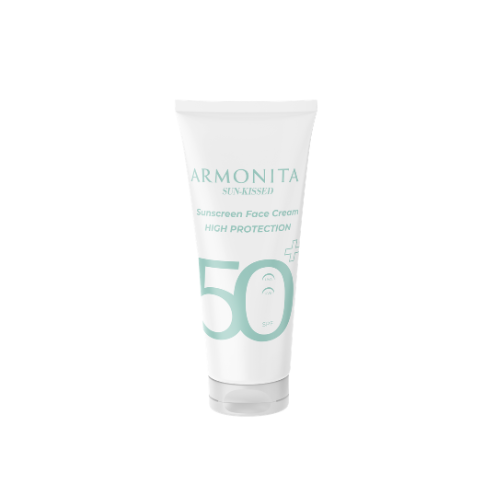
The Sunscreen Face Cream SPF 30 and SPF 50+ (50 ml) are formulated for the specificity of the face, where comedogenicity and interaction with other actives in the care protocol become critical variables. Both integrate Persea Gratissima Oil and Sodium Hyaluronate; the SPF 30 adds Niacinamide and Oryza Sativa Bran Oil for antioxidant and tone-regulating action; the SPF 50+ includes Butyrospermum Parkii Butter for more sensitive or dry skin, with a non-comedogenic formulation.
The Sunscreen Stick 50+ (9 ml) covers high-risk anatomical areas such as lips, scars, melasma-prone areas and tattoos, with a water-resistant formula suitable for sports and beach use.
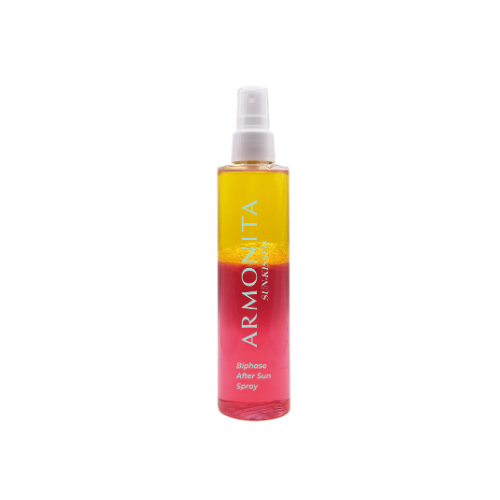
The Biphase After Sun Spray (200 ml) closes the cycle with a post-exposure repair action: the biphasic formula combines Triopherol®, Niacinamide and Carrot Oil to restore the hydrolipidic balance and prolong the uniformity of the complexion.

Application context and industrial value
The line is suited to B2B contexts where formulation safety is a negotiating requirement before being a marketing argument: pharmaceutical channel, aesthetic medicine, professional beauty.
The range structure allows building a complete photoprotection protocol, from morning to evening, with formulation consistency across all products. The line can also be useful as post-procedural support in aesthetic medicine, where skin in recovery phase requires sun protection without high-risk irritation ingredients.
If your company is interested in distributing sunscreen products with a high safety profile and certified natural formulation
Scientific source: Raymond-Lezman JR, Riskin SI. Sunscreen Safety and Efficacy for the Prevention of Cutaneous Neoplasm. Cureus. 2024;16(3):e56369. DOI: 10.7759/cureus.56369

