

Multi-molecular hyaluronic acid in a biphasic formulation to restore the skin barrier after laser, peeling, and ablative radiofrequency
Every ablative aesthetic treatment leaves a biological mark. Fractional CO2 laser, ablative radiofrequency, deep chemical peeling: each of these works on the tissue to produce the desired effect, but simultaneously destabilizes the epidermal barrier. That window of vulnerability, which can last from a few days to two weeks, is the moment when much of the final result is determined.
It is not just a matter of comfort. It is a matter of clinical outcome. The speed at which the barrier rebuilds determines the quality of re-epithelialization, the risk of pigmentary complications, and patient satisfaction. Managing it with appropriate formulative tools is not an optional addition to the protocol: it is part of the protocol.
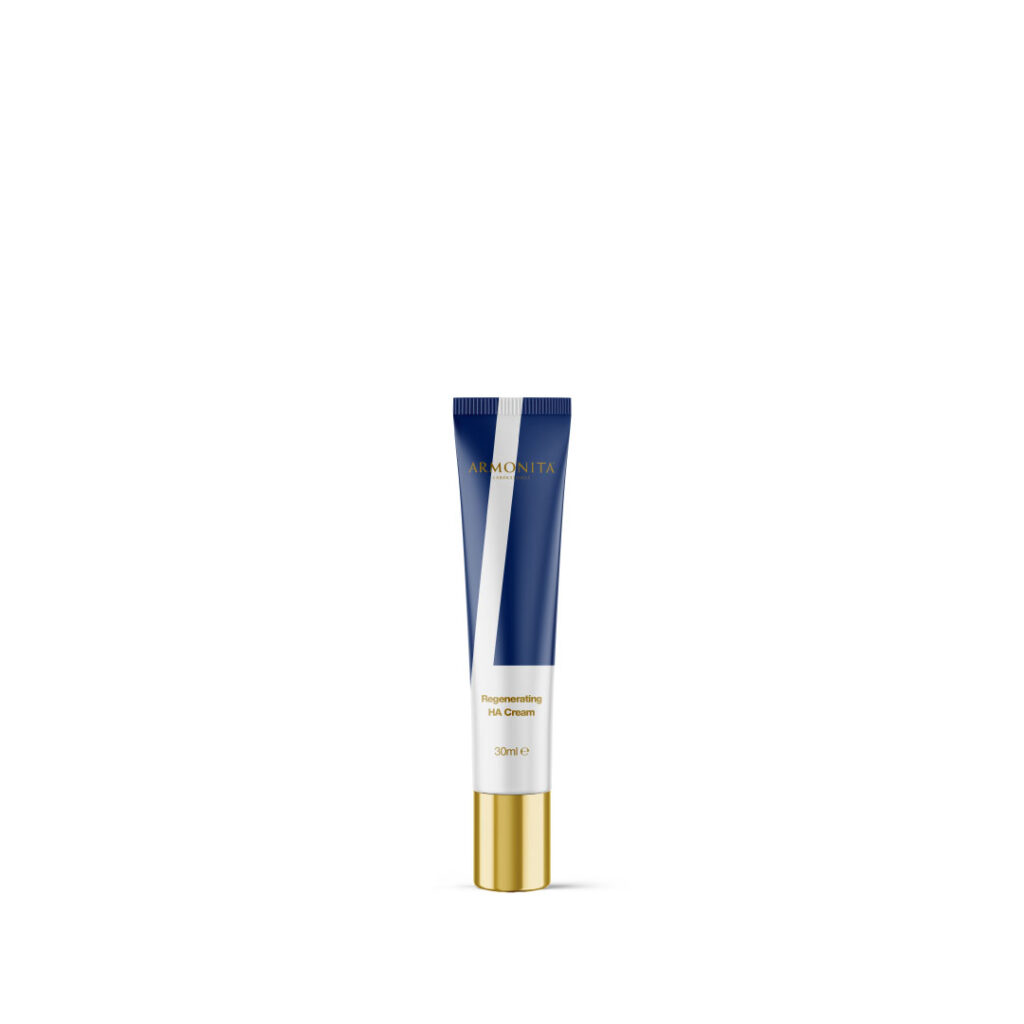
The dual product HA Serum and HA Regenerating Cream by Armonita Laboratoires is built precisely for this need.
The skin barrier after an ablative procedure
The stratum corneum functions as a “bricks and mortar” system: corneocytes are held together by an intercellular lipid matrix composed of ceramides, free fatty acids, and cholesterol. This architecture regulates both mechanical impermeability and the water content of the tissues.
Ablative procedures disrupt this system. CO2 laser creates micro-columns of thermal ablation through the epidermis; ablative radiofrequency alters the protein and lipid structure of the superficial layers; chemical peels temporarily denude the superficial dermis. The result is always an increase in TEWL, a rise in the erythema index, and a transient reduction in regenerative capacity.
At this stage, the skin does not need generic hydration. It needs a multilevel support that intervenes both in deep re-epithelialization and in the reconstruction of the surface film.
Clinical data: what post-procedural recovery measures
The prospective randomized clinical trial published by Wu et al. in 2025 in the Journal of Cosmetic Dermatology (DOI: 10.1111/jocd.70322) is the first study specifically designed on the use of multi-molecular HA in fractional CO2 laser post-recovery. Sixty patients, two groups, instrumental measurements at days 3, 7, and 14.
Results at day 14: TEWL 16.69 vs 19.79 in the control group (p=0.009). Reduction from baseline of 75.10% vs 70.89% (p=0.042). Erythema index significantly lower at all timepoints: days 3, 7, and 14 (all p<0.05). Pain duration: 0.20 days vs 0.53 (p=0.014). No adverse events.
Rapid normalization of TEWL equates to accelerated recovery of the protective function. Controlling erythema in the first 72 hours has a specific clinical implication: prolonged inflammation is one of the main predictive factors of post-inflammatory hyperpigmentation, a frequent complication in darker skin phototypes after ablative treatments.
HA Serum: the first phase of the protocol
The serum is applied in the acute post-procedure phase. The aqueous vehicle maximizes the penetration speed of hydrophilic molecules without the interference that a lipid emulsion would introduce.
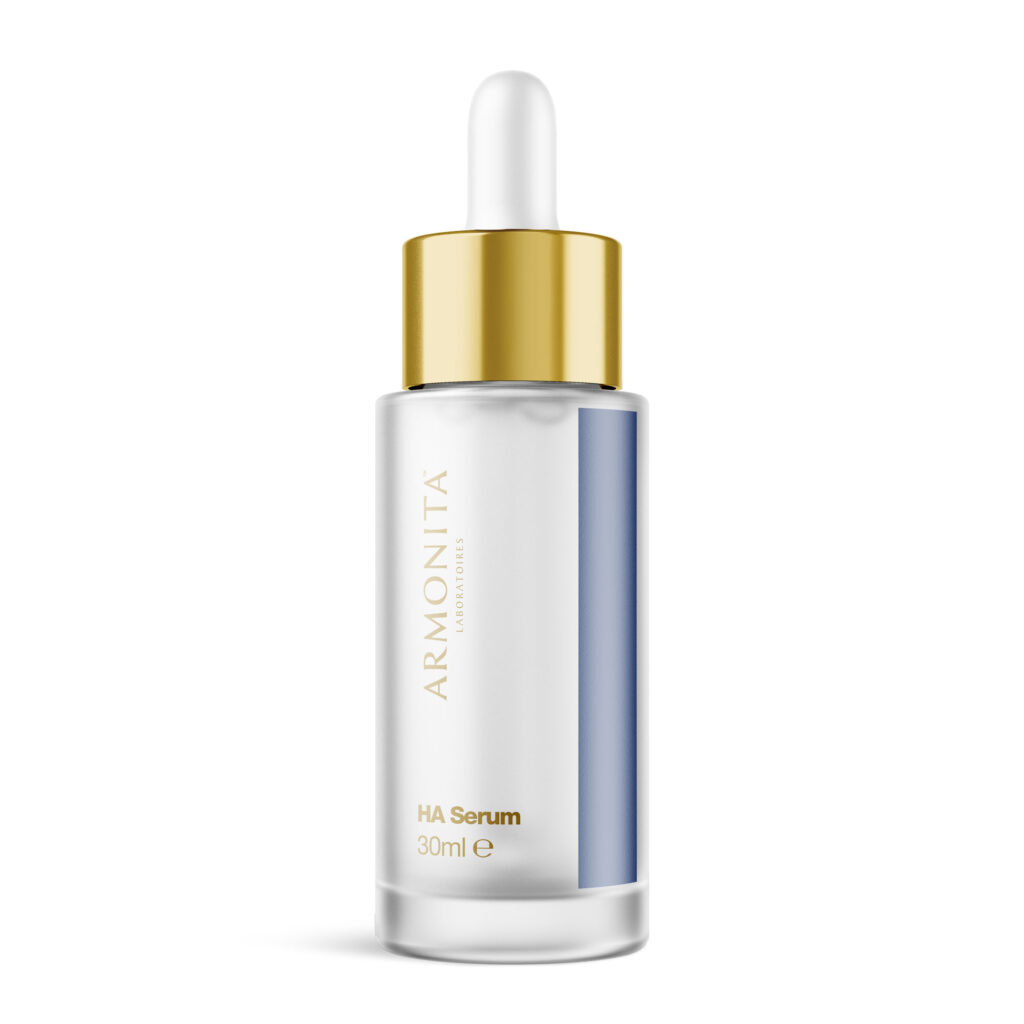
The formula combines multi-molecular HA (high, medium, and low molecular weight fractions in a 2:2:1 ratio) with Hyacare 50 (low molecular weight HA with high bioavailability) and Xilogel HS for a film-forming effect on the surface. D-Panthenol supports re-epithelialization; Nicotinamide modulates the erythematous response and ceramide synthesis. Glycotensyl and BiPure complete the profile.
HA Regenerating Cream: the second phase
The cream enters the sequence when the priority shifts from penetration to physical reconstruction of the barrier. The emulsified vehicle allows the controlled release of the lipid components necessary for the reconstruction of the intercellular matrix.
Shea butter, cocoa butter, argan oil, and jojoba oil replenish the lipid component of the hydrolipidic film. Ceramide 3 acts on the structure of the stratum corneum. Exo-H (derived from exosomes) introduces an advanced cell signaling rationale, flanked by Hydrosella. IBR-Urbiotect, Corneopeptyl, and Skinectura complete with antioxidant and biomimetic action.
Bromelain contributes to proteolytic activity on residual necrotic cells. Niacinamide and Triopherol close the anti-erythematous and antioxidant profile.
The value of the sequential protocol
The biphasic structure is not a marketing choice. It is a technical-formulative choice: to optimize each product for the function it must perform, without compromise.
An aqueous serum cannot do what a lipid cream does, and vice versa. Applying them in sequence means covering two distinct biological windows with the right tool for each: epidermal rehydration and signaling first, lipid barrier reconstruction after.
The safety profile is designed for sensitized skin: absence of fragrances, low allergenic potential preservatives, pharmaceutical-cosmetic grade raw materials. The production scalability of the 30ml format is consistent with professional use in aesthetic medicine and dermatology centers.
Interested in Armonita collections?
Source: Wu Z, Liang X, Yu Q, Zhang W, Shi Y. Effect and Safety of Skincare Regimens Containing a Multi-Molecular Hyaluronic Acid Complex for Recovery After Ablative Fractional CO2 Laser. Journal of Cosmetic Dermatology. 2025;24:e70322. DOI: 10.1111/jocd.70322

