

What cellular longevity can tell us about skin vitality
When we talk about aging, attention often focuses on what we can see: wrinkles, loss of elasticity, and changes in skin brightness and tone. In reality, the mechanisms that drive these changes begin much deeper, at the cellular level.
Among the many biological processes associated with aging, one of the most studied in recent decades involves telomeres, small structures located at the ends of chromosomes. These structures play a protective role for our DNA and are often considered one of the molecular markers linked to the aging process.
In recent years, however, longevity research has begun to reveal a more complex picture: telomere length may not simply reflect how old we are, but rather how healthy our cells are at a given moment.
Telomeres: the protective “caps” of DNA
Telomeres can be imagined as small protective caps located at the ends of chromosomes. Their function is to stabilize DNA and protect genetic information during cell division processes.
Every time a cell replicates, a small portion of the telomere is naturally lost. Over time, this progressive shortening has been associated with aging because cells eventually reach a limit where they can no longer divide efficiently. At that point the cell may enter a process known as programmed cell death, which prevents the accumulation of damaged or malfunctioning cells.
For many years, this mechanism led scientists to consider telomere length as a direct indicator of biological age: the shorter the telomeres, the “older” the cells appeared.
The reality, however, appears to be more complex.
When telomeres reflect health status more than age
Cells in our body replicate at very different speeds depending on their biological role. Some tissues renew rapidly, while others have much slower replication cycles. This means that telomere length does not always faithfully represent the age of the entire organism.
In many cases, telomeres are measured in blood cells, particularly in cells of the immune system. These cells are extremely reactive and respond quickly to external factors such as inflammation, infections, or environmental stress. During these processes they may replicate faster than usual, temporarily accelerating telomere shortening.
This suggests that telomere length can vary depending on the physiological stress the body is experiencing. An acute inflammatory phase or a state of oxidative stress can influence these measurements without necessarily indicating permanent biological aging.
In other words, telomeres can provide valuable information about the organism’s health status at a given moment, rather than about chronological age alone.
Environmental stress, inflammation, and cellular balance
External factors can also influence telomere dynamics. High levels of oxidative stress, exposure to pollution, or intense inflammatory responses place additional pressure on cells and can accelerate cellular turnover.
During these phases, immune system cells divide rapidly to respond to stressors. This accelerated replication can lead to a temporary shortening of telomeres. When the stressor decreases and the body returns to balance, the cellular population renews itself and the telomere pattern can change again.
This dynamic nature reinforces a concept that is becoming increasingly central in longevity research: cellular health is strongly influenced by lifestyle, environment, and metabolic balance.
Moderate physical activity, reduced oxidative stress, and balanced metabolic processes are associated with more favorable cellular parameters and a healthier biological environment.
What this means for skin aging
Skin is one of the tissues most exposed to external stressors. UV radiation, pollution, lifestyle habits, and oxidative stress all contribute over time to the reduction of cellular efficiency.
When cellular balance is compromised, visible changes appear: loss of elasticity, dull complexion, uneven texture, and slower regeneration processes. For this reason, modern aesthetic medicine increasingly focuses not only on correcting visible signs of aging, but also on improving the quality and vitality of skin tissues.
The goal is no longer simply to “fill” or temporarily mask signs of aging, but to promote a healthier environment for skin cells.
Supporting skin quality from a longevity perspective
Hydration, elasticity, and tissue quality are essential factors for maintaining a healthy and harmonious appearance over time. Treatments that improve these aspects help create more favorable conditions for skin regeneration.
In aesthetic medicine, one of the approaches used in this direction is biostimulation or biorevitalization. Rather than acting exclusively on volume, these treatments aim to improve skin hydration and vitality.
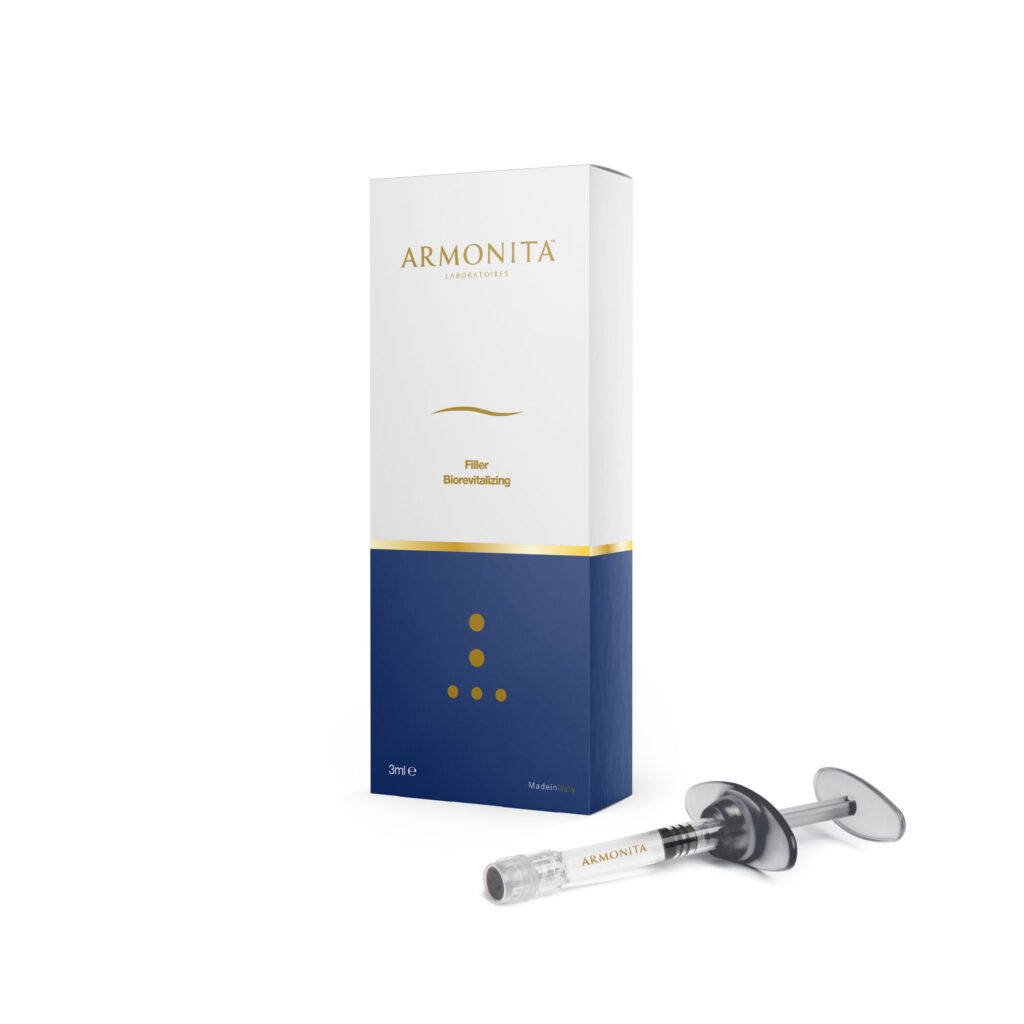
Within the Armonita line, Filler Biorevitalizing is described as a dermal skin booster formulated to promote deep hydration and support skin elasticity and density. It is often considered for delicate areas such as the periocular and perioral regions, where tissue quality is particularly important.
By supporting hydration and skin structure, treatments of this kind fit into a broader vision that is becoming increasingly central in aesthetic medicine: preserving skin health at the cellular level as part of a long-term longevity strategy.
A new perspective on aging
Research on telomeres reminds us that aging is not a fixed or purely chronological process. Instead, it is the dynamic result of the balance between cellular stress, lifestyle, and the body’s ability to maintain healthy tissues.
For skin and aesthetic medicine, this means adopting a more mindful approach: it is not only about reversing time, but about supporting the biological processes that keep tissues healthy and functional for as long as possible.
And when the skin is supported in this way, visible beauty simply becomes a natural consequence.
Are you interested in distributing the Armonita line?
Source: “Telomere Length: A Matter of Age or Health?”, Active ageing, Biological age, SoLongevity Research, https://solongevity.com/en/longevity-news/telomere-length-a-matter-of-age-or-health/

